 SMBDashboard
Appointment No-Shows: Measure First, Then Fix
By Mark Fulton · 2026-09-17 · 10 min read
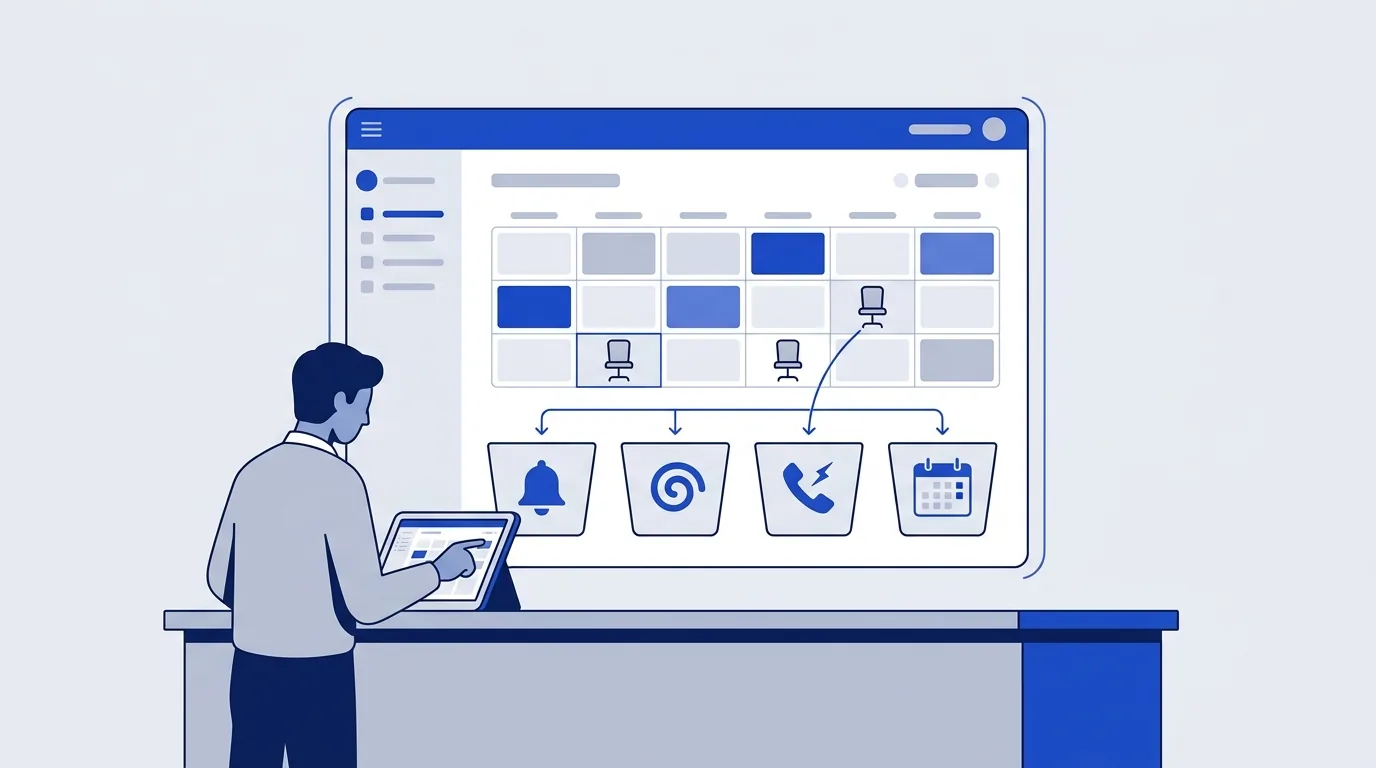
To reduce no-shows, find out why your customers miss before you pick a fix. For four weeks, log every booked appointment and every miss, and for each miss note how far ahead it was booked and what the customer says when you get in touch. Your no-show rate is no-shows ÷ appointments booked for the same period × 100. Then sort the misses into four causes: they forgot, they changed their mind, they couldn't easily reach you to cancel, or they booked so far ahead that plans changed. Each cause has its own fix. A reminder fixes forgetting. A confirmation step and easy rescheduling fix a change of mind. One obvious cancel route fixes friction. A shorter booking horizon or a re-confirmation fixes long lead times. A deposit is right for only a narrow slice of misses, and putting one on forgetful regulars costs you customers you were never going to lose.
How do you calculate your own no-show rate?
No-show rate = no-shows in the period ÷ appointments booked for the period × 100
That is the definition used in a 67-clinic study on reducing appointment no-shows published through the US National Library of Medicine: missed appointments divided by scheduled appointments. The hard part is defining what counts and sticking to it.
- A no-show did not arrive and did not tell you beforehand.
- A late cancellation told you, but too late to fill the slot. Keep these in a separate column. They have a different fix, and lumping them in hides whether your fix is working.
- Booked means on the calendar for that day, including anything that later cancelled late or never turned up. Walk-ins don't count.
Here is the four-week tracking method. Keep a tally with one row per booked appointment, and fill in the cause only for misses:
| Date | Customer | Days booked ahead | Reminder sent? | Outcome (kept, late cancel, no-show) | Cause (after contact) |
|---|
Each week, add up appointments booked and misses. After week four you have a rate, a count and a column of causes. That last column only fills in if you ask. The same day someone misses, send a short message offering to rebook: "Missed you at 2 today, hope all's well. Want me to find you another slot?" The reply tells you almost everything. "Totally forgot" is one cause. "I'm going to hold off for now" is another. "I tried to call but got voicemail" is a third. No reply usually belongs with the change-of-mind group.
Illustration only: a mobile dog groomer books 64 appointments over four weeks. Five customers don't turn up and three cancel that morning. Her no-show rate is 5 ÷ 64 × 100 = 7.8%, and her late cancellation rate is 3 ÷ 64 × 100 = 4.7%. Of the five no-shows, three forgot, one decided to trim the nails herself, and one never replied.
Four weeks is the minimum because one week is too small. At 15 appointments a week, a single extra miss moves the rate by nearly seven points.
What are the four common causes?
1. They forgot. The booking was genuine and it slipped. This is the cause reminders were built for.
2. They changed their mind. The need went away, the price started to feel high, they got nervous about the work, or they found someone else. They decided, and they didn't tell you.
3. They couldn't easily reach you. They meant to cancel, but your phone went to voicemail, the booking link had no cancel option, or it was after hours. Sometimes they assumed you wouldn't notice.
That third group is easy to underestimate. A University of Nebraska team interviewed 34 patients at a family practice about why people miss appointments without calling. The reasons they heard were emotional ones such as worry about the visit, feeling their time wasn't respected, and not understanding how the scheduling system worked. Transport and child care came up, but participants didn't name them as the key reasons, and the researchers describe patients assuming a busy clinic wouldn't notice a missed slot. A clinic isn't a dog groomer, but the pattern carries: people skip telling you when telling you feels like effort and the slot feels unimportant.
4. They booked too far ahead. The appointment was made weeks out, and by the day plans or needs had changed. In your tally, missed bookings show clearly longer lead times than kept ones.
Some misses fit two groups. Assign each to the cause easiest to act on; you are looking for the dominant pattern.
Which fix matches which cause?
This is the scorecard. Read across a row: the cause, how your tally reveals it, the fix that fits, what to measure afterwards, and what it costs to apply the wrong fix to that group.
| Cause | How your tally shows it | Fix that matches | What to measure after | Cost of the wrong fix |
|---|---|---|---|---|
| Forgot | "Completely forgot"; no reminder sent; often regulars | A reminder the day before, with time and address | No-show rate for reminded vs. unreminded bookings | A deposit or fee charges a loyal customer for a memory lapse. Some pay once, then quietly book elsewhere |
| Changed mind | No reply, or "holding off"; often first-timers or higher-priced jobs | A confirmation that asks for a reply, plus a one-tap way to reschedule | Share of bookings that never confirm, and how many of those miss | More reminders nag someone who has already decided. They mute you and you learn nothing |
| Couldn't reach you | "Tried to call", "didn't know how to cancel", after-hours messages | One obvious cancel route in every confirmation ("reply here to move it") | Late cancellations rise while no-shows fall. That is a win | A no-show fee punishes the people who wanted to tell you, and they remember it |
| Booked too far ahead | Missed bookings have longer lead times than kept ones | A re-confirmation a few days before long-lead bookings, or a shorter booking horizon | No-show rate split by lead time | Refusing long bookings loses the planners who were always going to show up |
Two things follow. A reminder fixes one row. If most of your misses are change-of-mind, reminders will barely move the number and you'll wrongly conclude nothing works. And the friction fix makes one figure look worse on purpose: some no-shows become late cancellations. That's progress, because a slot cancelled at 8am can sometimes be refilled and a 2pm no-show cannot.
If you send automated text reminders, get the customer's permission when they book and check the rules on automated messages where you operate.
How far ahead should you let people book?
Take the lead-time column and split every booking, kept and missed, into three buckets: under a week, one to three weeks, and longer. Work out the no-show rate for each. If the longest bucket misses clearly more often than the shortest, lead time is part of your problem.
The research points the same way. In the 67-clinic study, reducing the wait between scheduling and the appointment was one of the practices with a statistically significant effect on no-show rates, and the family practice interviews describe how waiting several days gave patients time to talk themselves out of coming. Those are health settings, so treat them as a reason to check your own split, not a prediction for your business.
If lead time is the issue, start with the option that costs least:
- Re-confirm long-lead bookings. Anything booked more than two weeks out gets a message a few days before, asking them to confirm or move it. You keep the planners and catch the changed plans.
- Shorten the booking horizon. The bluntest tool, so use it last. Some customers like to lock in a regular slot and will go elsewhere if they can't.
When is a deposit policy right, and when does it cost you?
A deposit changes the customer's decision, not their memory. That makes it the right tool for change-of-mind misses and the wrong tool for the other three causes.
It tends to fit when the same few customers account for several misses, when the slot is long or high-value and can't be refilled at short notice, or when bookings come from strangers through an online link with no relationship yet to carry the commitment.
It tends to backfire when your misses are mostly forgetting (a reminder fixes that for free) or friction (charging people who tried to cancel turns a scheduling problem into a trust problem). If regulars are among the misses, apply the deposit only to new customers or only after a second miss.
If you introduce one, put it in writing at the moment of booking: how much, whether it counts toward the price, how much notice gets it back, and what happens on a miss. Rules on deposits, cancellation fees and how they must be disclosed vary by location and industry, so check yours with a local business adviser or trade association. This explains the mechanics, not the law.
Its cost hides in bookings: a lower rate on fewer bookings can leave your days emptier than before.
How do you tell if the fix worked?
Change one thing, then measure for another four weeks with the same tally and definitions. If you add reminders and a deposit in the same week, you won't know which one worked, and you may keep paying for the one that didn't.
Compare three figures: the no-show rate, the late cancellation rate (which may rise if cancelling got easier), and appointments booked (which tells you whether the fix scared anyone off).
Don't assume a well-known fix worked because it usually does. In the 67-clinic study, reminder calls were by far the most popular change, and results varied widely: 20 of the organizations using them saw no-show rate changes of 20% or more, while 14 saw reductions under 10%. The author's recommendation was to collect data alongside reminder calls to see whether they are actually working.
Watch the counts as well as the percentage, because small numbers bounce: four misses falling to three is a 25% drop that could be nothing. And compare like with like. The weeks before a holiday are not a fair baseline for the weeks after it.
Once the rate is where you want it, a monthly look at misses fits into a one-page weekly review, so a slow creep back up gets caught early.
Where this lives in SMBDashboard
Track appointments and mark the misses for four weeks, and you'll have a real rate and a real cause. In the appointments module each booking gets a date, time, duration, linked customer and note, and downloads as a .ics file for any calendar app. Put the lead time in the note when you add it ("booked 12 days ahead"). There's no dedicated no-show button, and you don't need one: when someone misses, open their customer record, add a "no-show" tag, and write the date and cause in their notes. Tags show in the customer list, so repeat misses stand out.
For the denominator, the printable weekly report shows "appointments held", which counts every appointment on that week's calendar once its start time has passed, misses included. Divide the week's misses by it. For more from the same appointment book, salon KPIs you can work out without salon software covers rebooking rate, and customer retention for a small business deals with customers who stop booking altogether.
It's free with no account. Your data stays in your browser unless you turn on Pro sync, which is off by default. The free tier holds 25 customers and 200 money entries with unlimited tasks; Pro removes the caps and adds CSV export, recurring entries and your branding on the printed report.
FAQ
What is a normal no-show rate?
There isn't one you can usefully compare yourself to. Published figures come mostly from healthcare and vary enormously. The clinics in the 67-organization study started at an average of 37.4%, which describes addiction treatment clinics, not a hair salon or a tutor. Your own four-week baseline, and the direction it moves after a change, is the number that matters.
Do appointment reminders actually work?
For customers who forget, generally yes, which is why they're the most common fix. They do little for the other three causes, and published results vary widely. Send them, then compare the no-show rate on reminded and unreminded bookings.
Should I charge a no-show fee?
Only if your misses are mostly changed minds on slots you can't refill. If they're mostly forgetting or friction, a fee penalizes the wrong people and can cost you regulars. If you do charge one, disclose it in writing at booking, consider applying it only after a second miss, and check the rules where you operate.
How far in advance should reminders go out?
Early enough that a customer who can't make it can tell you, and you can refill the slot. For most service businesses that means the day before, with the time, the address and a clear way to reschedule. For bookings made weeks ahead, add a confirmation request a few days out. If customers still cancel too late to refill, move the reminder earlier.